HCI Researcher
01 — 05Shunnei Awano
Run first.
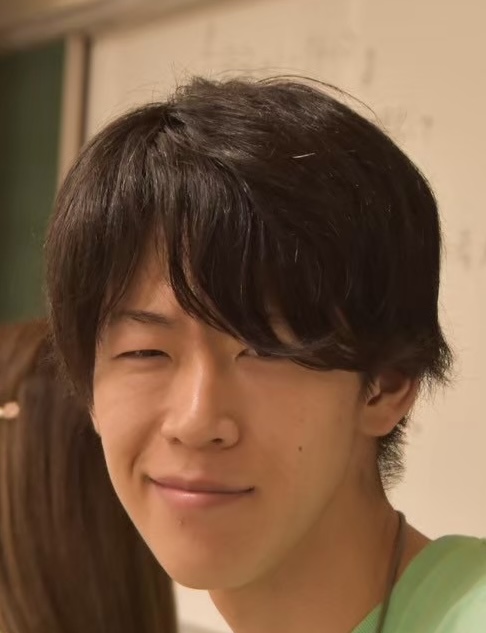

BIOGRAPHY
M1, Human Interface Lab, Kyoto Institute of Technology. Building prototypes and running user experiments toward optimal interaction in spatial computing.
Portfolio — 2026
Portfolio — 2026
Run first.
M1, Human Interface Lab, Kyoto Institute of Technology. Building prototypes and running user experiments toward optimal interaction in spatial computing.
Portfolio — 2026
We propose treating the omnidirectional space surrounding the user as a single workspace. A bimanual pinch rotates space itself, granting access to windows behind without turning the body.
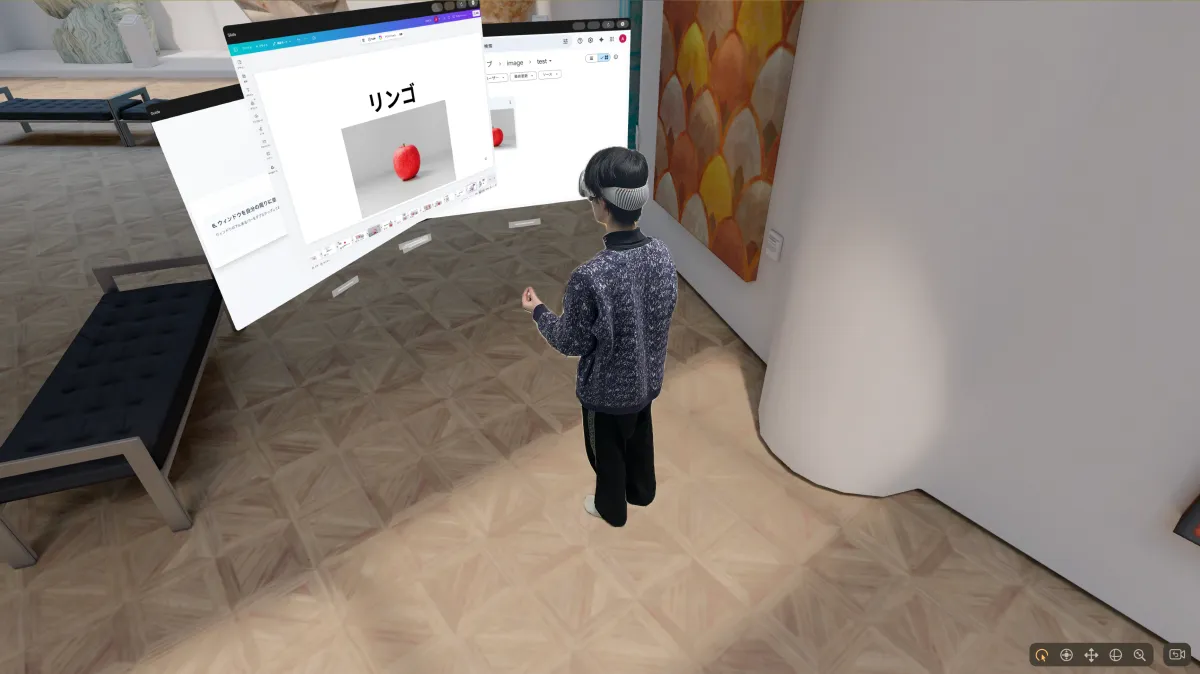
Baseline: front only
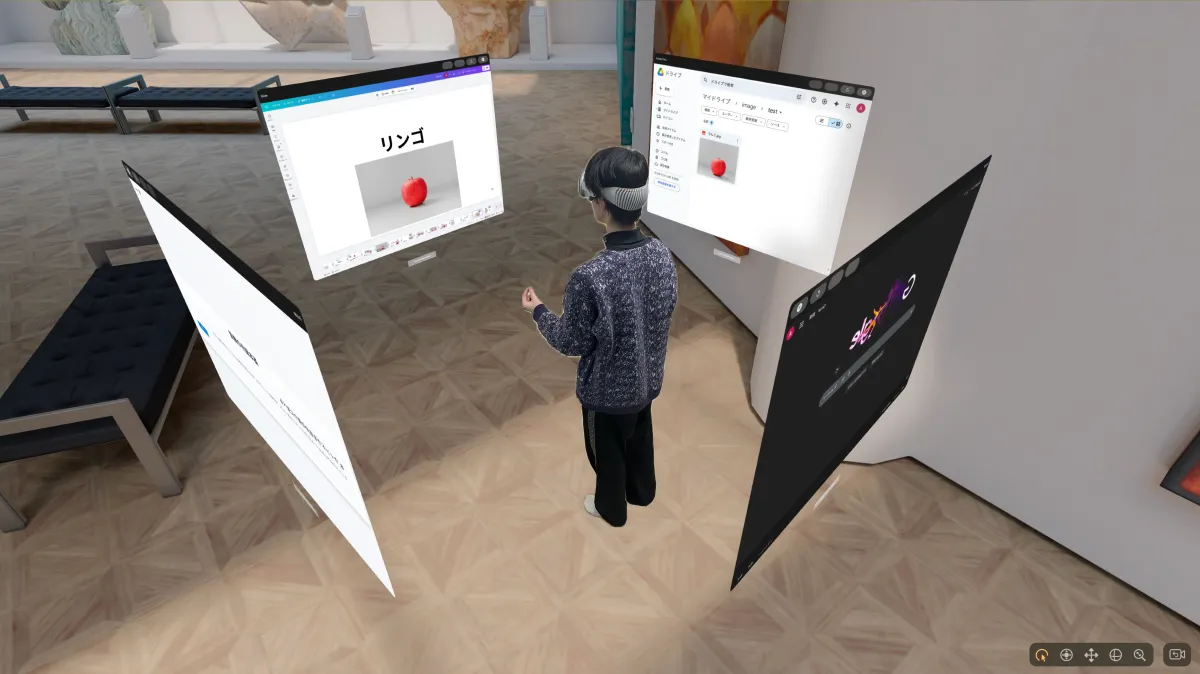
Proposed: omnidirectional
Multi-Window Operation Utilizing Omnidirectional Space in Mixed Reality
複合現実における全周囲空間を活用したマルチウィンドウインタフェース
IEEE ICIR 2026 — Pisa, Italy
The evolution of Head-Mounted Displays (HMDs) has enabled users to interact with information within a 360-degree space, but current multi-window environments underutilize this capability by concentrating windows in a limited frontal area. To address this issue, we propose a novel method for automatically arranging windows in a cylindrical workspace centered on the user, allowing seamless access to information located behind them. We implemented this system on the Apple Vision Pro and conducted an experiment with 21 participants involving a slide creation task. The study compared our proposed method with conventional operation methods using both subjective and objective metrics, including task efficiency and usability evaluations. Although we found no statistically significant improvements in task performance or user satisfaction with our method, the results revealed fundamental challenges common to multi-window tasks in HMD environments, such as difficulties with text input, visual feedback, and physical strain. These findings highlight the possibilities and limitations of utilizing omnidirectional space for multi-window operations and provide essential insights for designing effective workspaces in HMD environments.
LED illumination system built with Raspberry Pi as server, two M5Stick units connected via MQTT, controllable by sensor and remote. Team project for the lab programming contest.
The two M5Stick edge devices are also interconnected over MQTT, and a control web page deployed on the Pi provides another way to drive the illumination. Mainly responsible for the hardware, firmware, LED control, and MQTT layer.
View Details →A co-op 3D escape game where two players — a giant and a dwarf — leverage their contrasting abilities to solve gimmicks and escape together. Built in a 6-person team for the lab programming contest; responsible for room matchmaking and real-time state synchronization.
View Details →AR web application built at a hackathon to learn and practice A-Frame.
Validation prototypes built on M5Stack to explore physical device interactions through hardware and firmware.
View Details →Practicing visual communication and typography through publication design using Adobe Illustrator.
View Details →System evaluation and research activities in a different cultural and academic environment.
Tutor for the X3 "Sensor Hacking" and X4 "Fault Injection Attack" seminars.
Presented research on a multi-window interface utilizing omnidirectional space in MR environments at the peer-reviewed IEEE 5th International Conference on Intelligent Reality (ICIR 2026).
Student staff at KYOTO Design Lab's Design Factory. Alongside user support and facility operations, currently taking part in the "Campus Garden" XR workshop, recording and visualizing the campus garden through 3D scanning and environmental sensing (through Jul 2026).
Teaching sophomores pointers, list structures, and algorithms. Always explaining memory behavior first. Prioritizing understanding of the mechanics behind implementations over memorizing syntax — especially relevant now that AI handles the latter.
Track X3: Sensor Hacking. Reproduced a PPG (photoplethysmography) sensor using an M5Stack LED to feed arbitrary heart rate values to software. Hands-on experience with sensor attack vectors and the hardware-software boundary.